Look Out for These Causes of Sleep Loss
A list of common causes resulting in sleep loss are enumerated below.
- Individual’s Choice
- Not going to bed at a reasonable hour
- Pursuing activities late into the evening. Examples of these activities include:
- Socializing
- Chilling out
- Watching television
- Reading a book
- Working towards educational goals
- School assignments
- Working on making money
- Consistently going to bed late
- Consistently waking up too early
- Work
- Shift work – People who work shifts, regularly disrupt their sleep-wake cycle. In addition, frequent travelers and airline crews also tend to have erratic sleeping patterns.
- Demanding jobs that extend work into the evening and even into the night
- Jobs that require lots of overtime
- Sleeping Environment
- Bedroom is too hot or too cold
- Noisy neighbors
- Bed partner who snores
- Poor Sleep Hygiene
- Drinking coffee, alcohol, or smoking cigarettes close to bedtime stimulates the nervous system making sleep unlikely
- Instead of relaxing, lying in bed and worrying
- Family
- Family obligations
- Parents almost always experience sleep deprivation because their babies, older babies, and toddlers wake frequently in the night for feeding or comfort
- Sleep Disorders
- Snoring
- Restless leg syndrome – This is a neurological condition where a person has an uncomfortable sensation of needing to move his or her legs. As a result, the person’s sleep is disturbed during the night. Also, patients with restless leg syndrome typically experience worse symptoms in the transition from wake to sleep. As a result, falling asleep and staying asleep is difficult. Most of all, an estimated 10 percent of the population has restless leg syndrome.
- Medications
- Some drugs used to treat disorders such as epilepsy or Attention Deficit Hyperactivity Disorder (ADHD) affects sleep.
- By the same token, drugs taken for the common cold, nasal allergies, high blood pressure, heart disease, thyroid disease, birth control, asthma, and depression can affect sleep.
- Medical Conditions
- Obstructive sleep apnea causes partial or complete obstruction of the airway during sleep. As a result, breathing pauses and oxygen levels drop. And, this causes a person to wake up briefly but repeatedly throughout the night.
- Hormone imbalances
- Nasal or sinus allergies
- Colds and tonsillitis – which can cause snoring
- Gagging
- Frequently waking up in the night
- Gastrointestinal problems such as acid reflux
- Endocrine problems such as hyperthyroidism
- Anxiety
- Depression
- Arthritis
- Asthma
- Neurological conditions such as Parkinson’s disease
- Chronic pain
- Low back pain
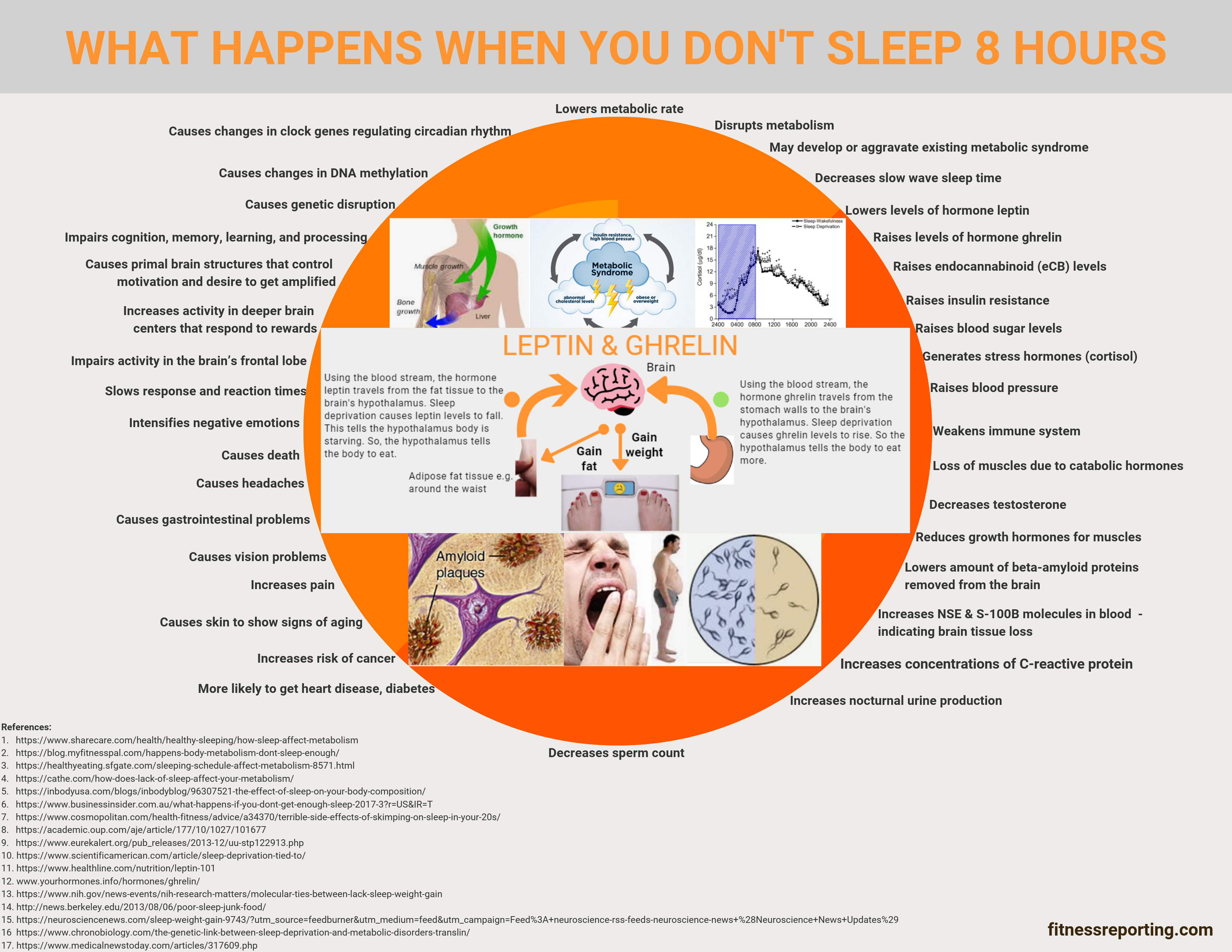
In conclusion, many of these causes may be beyond your control. However, the sleep loss they cause has adverse effects on your health (see infographic) requiring you to take remedial action.