
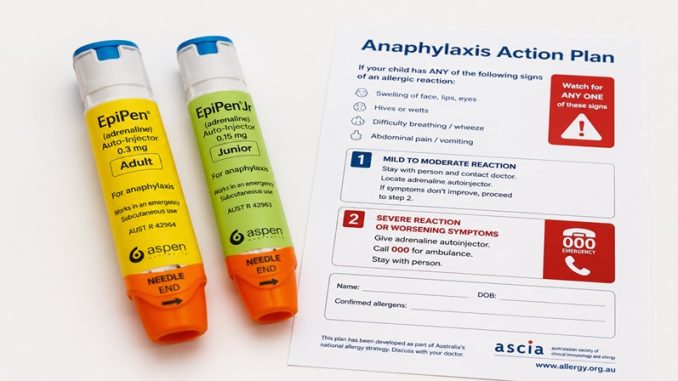
Australia has one of the highest rates of allergic disease in the world. Approximately one in 20 adults and one in 13 children live with a food allergy, and for a significant number of them, exposure to a trigger allergen can cause anaphylaxis a severe, potentially life-threatening allergic reaction that requires immediate medical intervention.
The EpiPen is the most widely recognised device for managing anaphylaxis in Australia. It’s a pre-filled, single-use auto-injector that delivers a precise dose of adrenaline, giving a person in anaphylactic shock critical minutes until emergency services arrive. Yet despite their importance, there’s still widespread confusion about who can carry them, how to use them correctly, and where to source them. This guide addresses all of that.
What is anaphylaxis, and when is an EpiPen needed?
Anaphylaxis is the most severe form of allergic reaction. It can be triggered by foods (nuts, shellfish, dairy, eggs), insect stings, medications, latex, and in some cases, exercise or cold. The reaction can develop within minutes of exposure and escalates rapidly, involving multiple body systems simultaneously.
Signs of anaphylaxis include:
- Swelling of the lips, tongue, or throat
- Difficulty breathing or wheeze
- Sudden drop in blood pressure
- Pale or floppy appearance in children
- Loss of consciousness or collapse
- Severe abdominal pain or vomiting following allergen exposure
When these symptoms appear, adrenaline via an EpiPen is the first line of treatment not antihistamines, not asthma puffers. The role of adrenaline is to reverse the effects of anaphylaxis: it constricts blood vessels, relaxes airway muscles, and stimulates the heart. Antihistamines act too slowly to be effective in a genuine anaphylactic emergency.
Who can carry and administer an EpiPen in Australia?
In Australia, adrenaline auto-injectors are classified as a Schedule 3 pharmacy medicine, meaning they can be purchased from a pharmacy without a prescription. However, individuals with a diagnosed allergy who are at risk of anaphylaxis should be assessed by a medical professional typically an allergist who will confirm the diagnosis, provide a written anaphylaxis action plan, and recommend appropriate devices.
There is no age restriction on who can administer an EpiPen in an emergency. Schools, childcare centres, and workplaces can hold EpiPens as part of their emergency response supplies, and staff can be trained to administer them if necessary. In most Australian states and territories, legislation explicitly protects individuals who administer an EpiPen in good faith during an emergency.
EpiPen sizes: understanding the difference
EpiPens are available in two doses in Australia:
- EpiPen (0.3 mg adrenaline) — for adults and children weighing 30 kg or more
- EpiPen Jr (0.15 mg adrenaline) — for children weighing 10–30 kg
The appropriate dose is determined by body weight, not age. A larger child may need the adult dose, while a small adult may be prescribed EpiPen Jr based on their weight. Always follow the prescription and action plan provided by the patient’s doctor.
People who need to buy EpiPens in Australia can source them through registered pharmacies and specialist first aid suppliers, both in-store and online.
How to use an EpiPen correctly
The design of the EpiPen is intentionally straightforward, allowing it to be used in high-stress situations by people who are not medical professionals. However, practising the steps beforehand with a trainer device significantly improves confidence and accuracy.
The standard process:
- Remove the EpiPen from its carrier tube and take off the blue safety cap
- Hold the EpiPen firmly in your dominant hand with the orange tip pointing down
- Place the orange tip firmly against the outer thigh — it can be used through clothing
- Push down hard until you hear a click, then hold in place for 10 seconds
- Remove the EpiPen and massage the injection site for 10 seconds
- Note the time of injection and call 000 immediately
After using an EpiPen, the person must go to the hospital even if they appear to have recovered. Anaphylaxis can have a biphasic reaction, with a second wave of symptoms occurring hours later, and medical monitoring is essential.
Storage and expiry: what you need to know
EpiPens should be stored at room temperature, ideally between 15°C and 25°C. They should not be refrigerated or exposed to direct sunlight, as temperature extremes can degrade the adrenaline. This is a common mistake; many people assume refrigeration helps preserve medication, when in this case it does not.
Always check the expiry date regularly. An expired EpiPen may still provide some effect, but the potency cannot be guaranteed. Schools and workplaces that hold EpiPens for students or staff should have a system for tracking expiry dates and replacing devices in advance.
The liquid in the EpiPen auto-injector window should be clear and colourless. If it appears discoloured, cloudy, or contains particles, the device should not be used.
EpiPens in schools and childcare settings
Most Australian states have specific regulations requiring schools to maintain anaphylaxis management policies and, in many cases, to hold EpiPens for students with diagnosed anaphylaxis risk. Individual health care plans should be developed for each at-risk student, and these plans must be accessible to all relevant staff.
Teachers and school staff are not required to have medical training to administer an EpiPen in an emergency but they do need to know where it is, whose it is, and how to use it. Regular training, ideally using trainer pens that don’t contain medication, is strongly recommended.
Schools should also consider the storage location carefully. EpiPens should be in a known, unlocked location that staff can access quickly. Some schools keep them in a central first aid room; others keep them in a small pouch that travels with the student. The right approach depends on the age of the child, the size of the school, and the specific risk profile.
Conclusion
For anyone at risk of anaphylaxis, an EpiPen is not a precautionary item; it’s a lifesaving tool. Understanding how to use it correctly, store it properly, and access it quickly can be the difference between a manageable emergency and a fatal one.
Whether you’re a parent of a child with allergies, a school administrator building an anaphylaxis management policy, or an individual recently diagnosed with a severe allergy, the steps are the same: get the right device, keep it accessible, check it regularly, and make sure the people around you know how to use it.