The Importance of Portion Awareness When Building Healthy Weight Loss Habits
Plenty of people overhaul their grocery list in the name of weight loss, trade drive-thru lunches for home-cooked bowls, and still stare in frustration when the scale barely moves after a month. On paper, every choice looks spotless: avocado toast on sprouted bread, a generous handful of almonds mid-afternoon, grilled salmon roasted in olive oil, and a smoothie packed with berries and peanut butter.
The missing piece in that scenario is rarely food quality. It is quantity. Choosing whole, nutrient-rich ingredients does wonders for your energy, digestion, and long-term health, yet weight loss still hinges on matching your overall intake to what your body actually uses. That is why portion awareness is one of the most valuable skills you can develop. Unlike strict dieting, which relies on cutting out entire food groups or obsessing over complex rules, portion awareness teaches you to recognize realistic amounts of food so you can lose weight steadily without feeling trapped by a meal plan.
Portion Size vs. Serving Size: Clearing Up the Confusion
Most misunderstandings about how much we eat start with two terms that sound interchangeable but mean completely different things.
A serving size is a standardized measurement printed on a Nutrition Facts label, meant to help you compare products and calculate nutrients consistently. It is a reference point, not a dietary prescription. A portion size, on the other hand, is the actual amount of food you put on your plate, pour into your glass, or eat in one sitting.
In everyday American food culture, those two numbers drifted miles apart decades ago. Pick up a standard box of breakfast cereal and check the side panel: one serving is often three-quarters of a cup. Pour cereal into a deep modern kitchen bowl until it looks “normal,” and you can easily hit two and a half cups before the milk even touches it. Restaurant dining magnifies the gap further. A single cafe bagel can equal three to four slices of sandwich bread, and an average restaurant pasta entree regularly delivers enough starch and sauce for three complete meals.
Living surrounded by oversized dinner plates, 32-ounce fountain cups, and massive takeout containers quietly rewires our visual instincts. When giant portions become the baseline, a genuinely appropriate amount of food can initially look stingy—even when it contains plenty of energy and nutrition to keep you satisfied for hours.
Why Nutritious Foods Still Demand Portion Awareness
One of the sneakiest obstacles during weight loss is assuming that healthy foods come with an unlimited pass. Dietitians often refer to this blind spot as the health halo effect. Because a food offers fiber, antioxidants, or heart-healthy fats, it feels almost immune to overeating.
In reality, several of the healthiest staples in a modern kitchen are also remarkably calorie-dense. Extra-virgin olive oil is a cornerstone of balanced eating, yet a single level tablespoon packs roughly 120 calories. Tipping the bottle freely over a skillet of vegetables and again over a dinner salad can add 350 to 400 unseen calories in ten seconds. The same pattern shows up with peanut butter scooped off a heaping soup spoon, roasted nuts eaten casually by the fistful, crunchy granola poured over yogurt, and creamy avocado-based dressings.
None of these foods belong on a banned list. Healthy fats slow digestion, support hormone production, and make meals taste satisfying enough to stick with. Portion awareness simply helps you enjoy them intentionally—using a measured tablespoon of dressing or a small ramekin of almonds—rather than accidentally letting nutrient-dense extras stall weeks of consistent effort.
How Portion Awareness Outperforms Rigid Dieting
Traditional weight loss plans usually lean on extremes: zero carbohydrates, rigid detox windows, or banning every dessert in sight. Those approaches sometimes drop water weight fast, yet they almost always collapse the moment real life returns. One birthday dinner, vacation weekend, or stressful week at the office triggers an all-or-nothing spiral.
Portion awareness builds a much calmer, more durable foundation for three practical reasons.
First, it preserves food flexibility. When you understand portions, no single food has the power to derail your progress. You can share appetizers at a restaurant, enjoy a scoop of real ice cream on a hot evening, or eat your family’s favorite pasta dish while still staying aligned with your goals. Removing rigid food bans lowers psychological tension and sharply cuts down on rebound cravings.
Second, it strengthens internal hunger and fullness cues. When oversized plates dictate when a meal ends, you eat until the plate is clean rather than until your stomach signals comfortable satisfaction. Starting with reasonable portions invites you to check in with your actual appetite instead of running on autopilot.
Third, it scales effortlessly across every setting. You cannot carry a food scale to a wedding reception, a work conference, or a neighbor’s backyard barbecue. Once you train your eye to estimate portions accurately at home, that skill travels with you everywhere without requiring constant apps or calorie math.
Practical Ways to Build Portion Awareness Every Day
Developing strong portion instincts does not require turning your kitchen into a chemistry lab. A few low-effort habits practiced consistently retrain your eyes and reshape your routines within weeks.
Use Simple Visual Anchors
If counting every gram feels exhausting, your own hand is a surprisingly reliable measuring tool because it scales naturally with your body size. For most balanced meals, aim roughly for:
-
One palm-sized portion of lean protein, such as chicken breast, fish, tofu, Greek yogurt, or lean beef.
-
One cupped handful of dense carbohydrates, like cooked rice, quinoa, oats, beans, or potatoes.
-
One thumb-sized portion of concentrated fats, including cooking oils, butter, nut butters, or salad dressings.
-
One to two fist-sized portions of non-starchy vegetables, such as broccoli, leafy greens, zucchini, peppers, or roasted cauliflower.
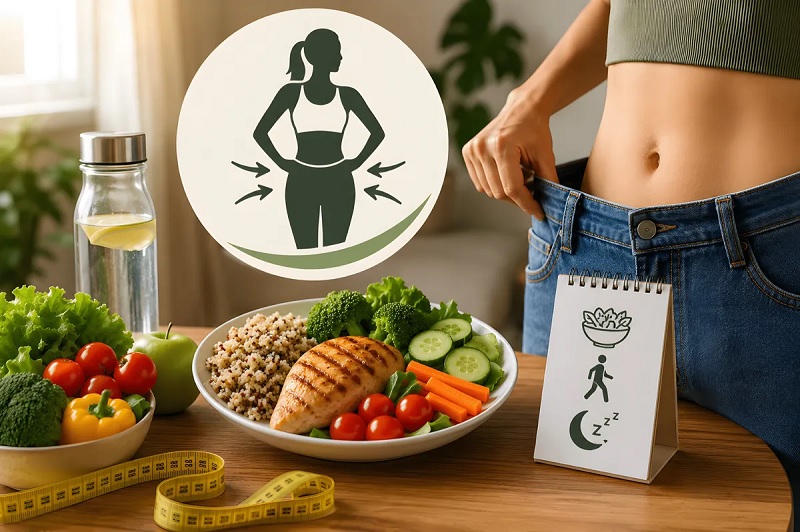
You can also apply the balanced plate method at lunch and dinner. Fill half of a standard dinner plate with colorful non-starchy vegetables, reserve one quarter for lean protein, and use the final quarter for whole grains or starchy sides. That layout naturally boosts food volume and fiber, keeping your plate visually generous while keeping overall calories comfortably controlled.
Calibrate Your Eyes Briefly With Measuring Tools
Even people who never want to track calories long-term benefit enormously from a short two-week calibration period. Pull out measuring cups, measuring spoons, and an inexpensive digital kitchen scale and measure just your most calorie-dense staples—cooking oil, peanut butter, pasta, rice, cheese, cereal, and nuts.
Pour your usual bowl of morning oats, then measure it to see what you actually poured. Spoon out what you assume is two tablespoons of hummus, then check it against a real measuring spoon. Most people are genuinely surprised the first few times they do this. After ten to fourteen days, your brain absorbs those exact visual dimensions, and you can put the measuring tools back in the drawer with much sharper intuition.
Adjust Your Kitchen and Dining Environment
Willpower fades fast at 7 p.m. after a long workday, which is why tweaking your physical environment does so much heavy lifting.
Start with your dishware. Serving dinner on a 9- or 10-inch plate instead of a giant 12-inch plate makes a moderate meal look full and abundant, satisfying the visual brain before you even pick up a fork. Keep serving dishes on the kitchen counter or stove rather than placing big platters right in the center of the dining table; adding a short walk for seconds forces a brief pause to ask whether you are genuinely still hungry.
For snacks, make one ironclad rule: never eat straight out of the bag, box, or carton. Chips, crackers, popcorn, and trail mix vanish rapidly when your hand dips blindly into an open package. Scoop a deliberate portion into a small bowl, seal the original package, and put it back in the pantry before sitting down. When dining out, scan the plate as soon as it arrives. If the portion is clearly oversized, ask for a to-go box upfront and pack half away for tomorrow’s lunch before taking your first bite.
Slow the Pace of Your Meals
Your digestive tract needs roughly fifteen to twenty minutes to send strong satiety hormones to your brain. Eating rapidly while scrolling through emails or standing over the kitchen sink makes it easy to blow past comfortable fullness before those signals ever register. Setting your fork down between bites, taking a sip of water periodically, and pausing halfway through your meal gives your body time to tell you that a sensible portion was plenty.
Common Portion Awareness Traps to Watch Out For
As you start paying closer attention to portions, a few common missteps can quietly work against you if you are not watching for them.
Cutting portions too small is the most frequent overcorrection. Portion awareness does not mean eating tiny bird-sized meals and white-knuckling your way through constant hunger. Skimping on lean protein and fibrous vegetables at breakfast and lunch almost guarantees intense afternoon cravings and heavy grazing after dinner. Be generous with high-volume, lower-calorie foods like greens, berries, broth-based soups, and lean proteins while keeping a closer eye on dense starches, sweets, and added fats.
Overlooking liquid portions catches countless people off guard. Beverages rarely trigger the same fullness response as chewing solid food, yet they contribute real energy. A large specialty coffee drink, a heavy-handed evening wine pour—where an oversized glass easily holds eight or nine ounces instead of a standard five-ounce pour—or a big glass of fruit juice can rival a full meal without leaving you any less hungry an hour later.
Ignoring invisible grazing also blurs the picture. A few bites of a child’s macaroni and cheese, tasting pasta sauce three times while cooking, grabbing two mini chocolates walking past a coworker’s desk, and licking the peanut butter knife rarely register as “eating,” yet those scattered bites can easily add several hundred unaccounted calories over a day.
Making Portion Awareness Second Nature
Building lasting weight loss habits is rarely about finding a dramatic new diet trick. It is about quietly closing the gap between what you think you eat and what actually lands on your plate day after day. When you stop treating portion awareness like a punishment and treat it like a practical life skill—much like checking a monthly budget—everything about eating becomes lighter and less stressful. Start with just one meal a day, pay attention to how balanced portions make you feel two hours later, and let steady, repeatable habits do the work that extreme diets never could.