How to Set Realistic Yoga Goals Without Turning Practice Into a Competition
Almost everyone steps onto a yoga mat hoping to feel calmer, looser, and more grounded. Yet within fifteen minutes of class starting, a familiar mental scoreboard often flickers to life. You glance two mats to your left and notice someone folding effortlessly over straight legs while your own fingertips hover awkwardly near your shins. On your phone later that evening, a video feed serves up effortless handstands and deep backbends framed in sunlit studios. Before long, a practice meant to quiet your nervous system starts feeling suspiciously like another arena where you are falling behind.
Wanting direction in your practice is not the problem. Setting goals gives your time on the mat structure, helps you stay consistent when work gets hectic, and lets you notice real growth over months of effort. The friction begins when yoga goals borrow the same competitive wiring we use for career milestones, race times, or lifting heavier weights. When you approach yoga with realistic, process-focused goals instead of rigid performance targets, your practice stays challenging, rewarding, and genuinely restorative.
Why Yoga Easily Slips Into Quiet Competition
Most adults walk into yoga carrying decades of achievement conditioning. At work, progress is tracked through deadlines and quarterly metrics. At the gym, success means adding five pounds to a barbell or shaving thirty seconds off a mile split. Because we are trained to equate effort with visible output, it feels natural to look at yoga through the exact same lens: deeper stretches, harder balances, sweatier classes, and cleaner shapes.
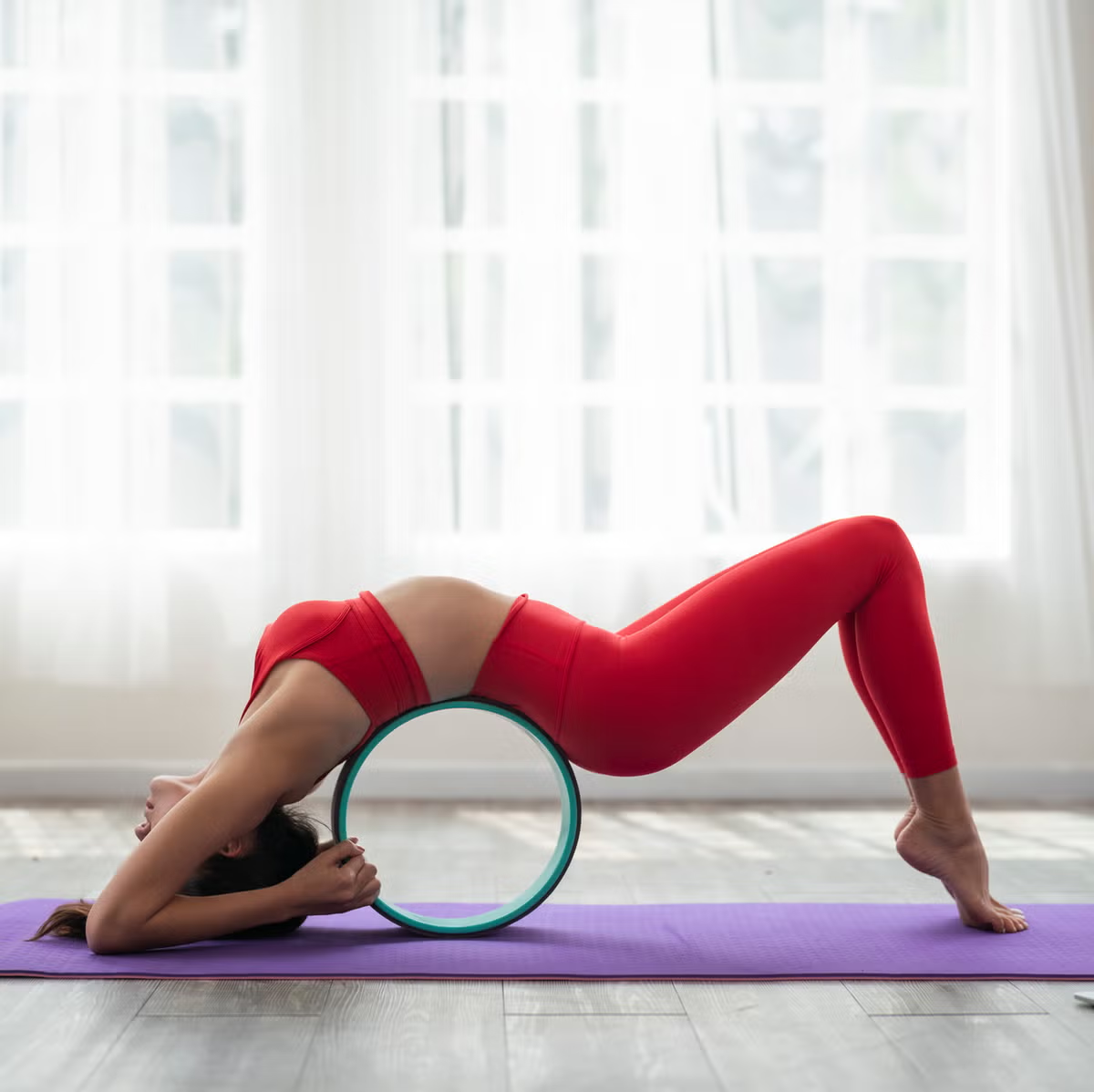
Modern wellness culture reinforces that impulse constantly. Photography and short-form video naturally highlight dramatic peak postures because a vertical split or floating forearm stand stops a scrolling thumb far faster than someone breathing calmly in a gentle seated twist. What those highlights leave out is context. You rarely see a person’s decade of childhood dance training, their naturally mobile joints, or the fact that extreme flexibility often requires careful stabilization to stay healthy.
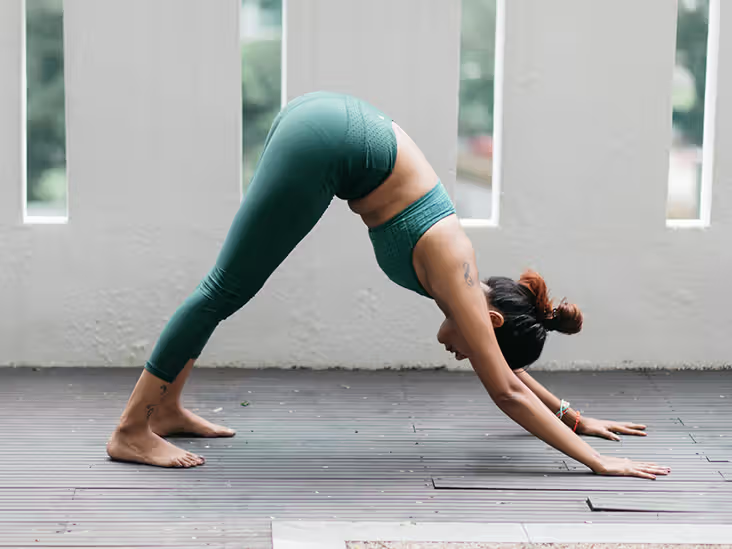
Comparison does not only happen across the room, either. Just as common—and often more frustrating—is internal competition, where you measure today’s body against an earlier version of yourself. If you touched your heels to the floor in downward-facing dog last Thursday, it is tempting to force your calves into the same depth on Monday morning after a six-hour flight. Treating every single practice as an obligation to match or beat your previous best quietly turns self-care into an audition.
Outcome Goals vs. Practice Goals on the Mat
The simplest way to keep ego out of your yoga routine is to change the kind of goal you set. Most frustration stems from chasing outcome goals—fixed physical shapes attached to a deadline—instead of practice goals, which center on habits, awareness, and steady exploration.
An outcome goal sounds like, “I want to master crow pose in six weeks,” or “I will get my palms flat on the floor in a standing forward fold by summer.” Those targets seem concrete, yet they carry two hidden flaws. First, they encourage forcing your joints to meet an arbitrary calendar. Pulling hard on tight hamstrings or jamming your wrists into an arm balance before your shoulders are ready leads straight to nagging strains. Second, outcome goals create a binary pass-or-fail verdict. If your palms are still two inches off the floor in July, you feel defeated even though your lower back feels dramatically looser than it did in April.
A practice goal shifts your attention to actions fully under your control. It sounds like, “I will spend twenty minutes on my mat three mornings a week,” or “I will keep my breath slow and steady through every standing sequence.” Ironically, people who commit to grounded practice goals usually unlock challenging postures faster—and far more safely—than people trying to brute-force a shape, because steady, tension-free repetition gives tendons, muscles, and the nervous system time to adapt honestly.
Practical Ways to Build Realistic Yoga Goals
Setting meaningful goals without slipping into comparison takes deliberate framing. A few practical shifts help you design targets that fit your body, your calendar, and your real reasons for practicing.
Anchor Your Goals to Function and Feeling
Before choosing a physical target, ask what you want yoga to improve off the mat. Very few busy adults actually need to tuck a foot behind their head to enjoy their lives. What most people genuinely want is waking up without a stiff lower back, carrying groceries without neck tension, feeling steadier on uneven hiking trails, or winding down cleanly after high-stress workdays.
Translate those everyday priorities into concrete yoga intentions. If your hips lock up from desk work, make your goal exploring gentle hip openers and lunges twice a week to ease evening stiffness. If stress keeps your mind racing at night, aim for ten minutes of slow floor postures and extended exhales before bed. When your goal is tied to how your body feels and moves through daily life, watching someone else fold in half across the studio instantly loses its sting.
Respect Your Unique Anatomy
No two human skeletons are built identically, yet people routinely grade their yoga poses against a single idealized silhouette. Differences in femur length, the angle and depth of your hip sockets, torso-to-leg proportions, and natural spinal curves determine how far certain joints can physically move. Two people can practice diligently for ten years and still look noticeably different in pigeon pose or seated forward fold—not because one worked harder, but because bone meets bone at different angles.
Realistic goal setting honors sensation over aesthetics. Every posture has a target area it intends to stretch, strengthen, or mobilize. If you feel a steady, healthy stretch along the back of your thighs with deeply bent knees in a forward fold, you are doing the exact same work as a neighbor with straight legs and palms on the floor. Judging a pose by how it functions in your body rather than how it looks in a mirror removes the primary fuel of studio comparison.
Shrink the Commitment Until Consistency Sticks
Ambition often sabotages yoga routines before they have a chance to take root. Many beginners—and returning practitioners—set sweeping goals like attending five 75-minute heated classes every week. That pace might survive a calm week in January, yet the first late meeting or family cold shatters the streak. Once the streak breaks, guilt creeps in, and a missed Tuesday turns into three weeks away from the mat.
Build your schedule around your busiest realistic week, not your calmest fantasy week. Commit to two studio classes per week, or three 15-minute home flows before breakfast. A modest target you hit week after week compounds quietly into real strength, joint resilience, and calm. If extra time opens up on a Sunday afternoon, a bonus session feels like a welcome gift rather than a frantic catch-up chore.
Treat Props as Smart Alignment Tools
In competitive gym settings, modifying an exercise can sometimes carry a quiet stigma. Bring that mindset into yoga and you end up avoiding blocks, straps, bolsters, and folded blankets because they feel like “beginner gear.”
Experienced teachers view props the opposite way: props bridge the gap between your anatomy and clean alignment. Elevating your hands on two sturdy blocks during a low lunge gives tight hips space to open without collapsing your chest. Looping a yoga strap around your foot lets your shoulders stay relaxed while your hamstrings lengthen safely. Setting a goal to learn how props improve your posture quality—rather than racing to ditch them—signals maturity, not weakness.
Spotting Competitive Habits in Real Time
Even with thoughtful intentions, the competitive urge still sneaks back onto the mat from time to time. Learning to catch its early warning signs lets you step back into mindful practice before tension takes over.
Your breath is the most honest indicator you have. If your inhales grow shallow, your jaw clenches, or you catch yourself holding your breath just to sink an inch lower into a stretch or hold a tricky balance, your ego has quietly grabbed the steering wheel. A posture you cannot breathe calmly inside is a posture you have pushed too far. Backing off by ten percent until your exhale smooths out restores both safety and benefit immediately.
Watch your eyes as well. Constantly glancing around the studio to see how long other students hold plank pose or whether anyone else dropped to child’s pose pulls your focus completely outside your own body. Practice anchoring your drishti—a soft, steady gaze fixed on one unmoving point on the floor, wall, or your own mat. Keeping your visual attention anchored on your own space quiets comparison faster than any pep talk.
Pay attention to how you respond when a teacher offers an optional rest or a gentler variation. Skipping child’s pose when your wrists ache or forcing a full chaturanga when your shoulders are fatigued purely out of pride breaks trust with your body. Choosing the modified option on a low-energy day is actually an advanced yoga skill—it requires far more self-awareness than blindly grinding through exhaustion.
Measuring Real Progress Beyond Peak Poses
If you stop grading yourself on contortion and studio performance, how do you tell whether your practice is genuinely moving forward? Real yoga progress shows up in quieter, far more durable ways—many of which appear long before a dramatic pose clicks into place.
Notice whether your transitions feel smoother and more deliberate instead of rushed. Pay attention to whether you recover faster from stiff mornings, sit taller at your desk without reminding yourself, or catch frustration rising in rush-hour traffic and take a full breath before reacting. Track simple milestones like showing up on days when motivation felt flat, staying present through five quiet minutes of final rest without mentally rewriting your grocery list, or recognizing early physical fatigue before it turns into soreness.
Keep a brief note in a journal or on your phone every month or two recording how your energy, sleep, mobility, and focus feel. Looking back over three months of steady, unhurried practice reveals a level of growth that a single flashy pose never captures.
Yoga does not hand out medals for touching your forehead to your knees, and nobody in the room is keeping track of how deeply you twist. When you trade rigid shapes for realistic, body-aware goals, every session becomes a conversation rather than a test. You leave the mat feeling steadier, stronger, and clearer than when you arrived—and that is the only measure of progress that truly lasts.