Best Strength Exercises to Build Stronger Legs and Improve Lower Body Fitness
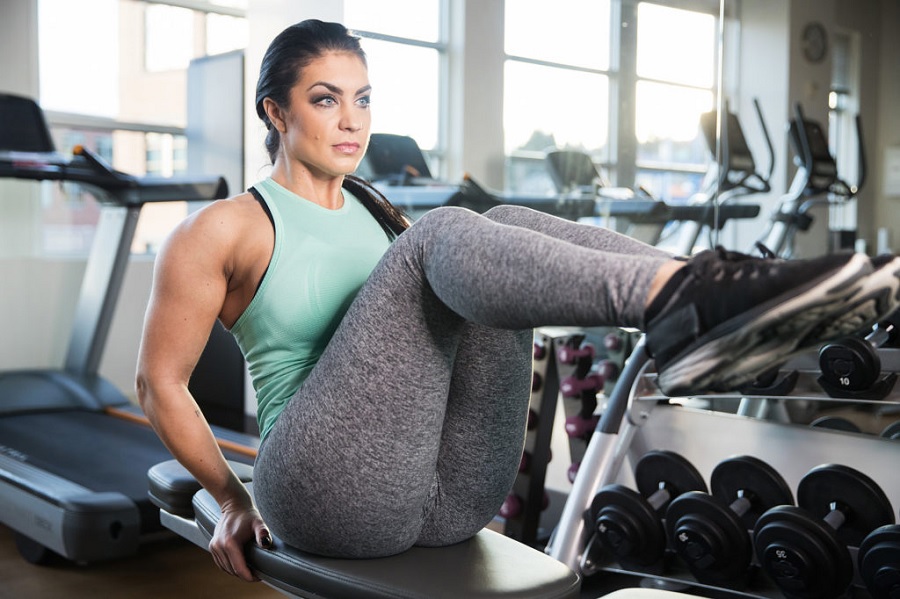
Walk into almost any gym on a Monday evening and the contrast is hard to miss. The bench presses and cable stations have waiting lines, while the squat racks sit half-empty. Even among dedicated lifters and runners, lower body training often gets reduced to a quick round of bodyweight lunges or a few brisk miles on the treadmill. Cardio builds endurance, certainly, but it does not build true lower body strength.
Developing strong legs changes how your entire body performs. Your quadriceps, hamstrings, glutes, and calves make up the largest muscle groups in the human body, driving everything from sprinting and climbing stairs to protecting your knees and lower back as you age. The catch is that random leg workouts rarely produce lasting progress. Real lower body strength comes from anchoring your routine around a handful of proven, foundational exercises and executing them with precision over time.
Why Balanced Lower Body Training Requires More Than Squats
If you want legs that are both powerful and resilient, you need to train every major movement pattern the lower body performs. Relying on a single exercise—even a great one like the squat—leaves noticeable strength gaps. Squats emphasize the front of the thighs and require strong knee extension, yet they do relatively little to challenge the hamstrings through a full stretch.
A well-rounded lower body program blends four distinct elements: a knee-dominant movement (like a squat) to build the quadriceps, a hip-dominant hinge (like a deadlift variation) to strengthen the hamstrings and glutes, a unilateral single-leg exercise to eliminate side-to-side imbalances, and targeted work for the glutes and calves to support hip stability and ankle strength. Covering all four angles ensures your muscles grow in proportion, your joints track smoothly under load, and everyday athletic movements feel noticeably easier.
The Best Strength Exercises for Stronger Legs
You do not need a dozen complicated machines to build an impressive lower body. Mastering the six movements below gives you everything required to develop strength, muscle definition, and functional fitness whether you train in a commercial gym or a modest home setup.
Barbell Back Squat
The back squat earns its reputation as the cornerstone of lower body training because it recruits virtually every muscle from the waist down while demanding full-body stability. Your quadriceps handle the primary work of extending the knees, your glutes power you out of the bottom position, and your core works overtime to keep your torso rigid.
To get the most out of every rep, stand with your feet roughly shoulder-width apart and turn your toes slightly outward. Take a deep breath into your belly to brace your core before unlocking your hips and knees together. Lower yourself under control until your thighs are at least parallel to the floor, allowing your knees to track naturally over your toes. Drive through the middle of your foot to stand back up smoothly.
If a barbell across your upper back feels uncomfortable or your ankle mobility limits your depth, start with goblet squats holding a heavy dumbbell at chest height. The front-loaded weight acts as a natural counterbalance, making it much easier to keep your chest upright and hit clean, deep repetitions.
Romanian Deadlift
While squats dominate the front of the legs, the Romanian deadlift (RDL) is unmatched for building the posterior chain, the powerhouse muscles running down the back of your body. Unlike a conventional deadlift pulled from the floor, the RDL starts from a standing position and emphasizes a slow, controlled stretch of the hamstrings and glutes.
Hold a barbell or pair of dumbbells directly in front of your thighs with a slight, fixed bend in your knees. Keeping your spine neutral and your shoulders pulled gently back, push your hips straight behind you as if trying to close a car door with your glutes. Let the weight glide right along the front of your legs. Once your hips stop traveling backward—usually when the weights reach just below your knees—squeeze your glutes hard and drive your hips forward to return upright.
Avoid the temptation to chase the floor by rounding your lower back. Range of motion on an RDL depends on hamstring flexibility, not how close the bar gets to your shoes.
Bulgarian Split Squat
Few exercises humble strong lifters faster than the Bulgarian split squat, and few deliver a bigger return on effort. Almost everyone has a dominant leg that subtly takes over during bilateral exercises like squats and leg presses. Training one leg at a time forces each side to pull its own weight, improves hip and knee alignment, and builds impressive muscle without requiring heavy weight on your spine.
Stand about two feet in front of a sturdy bench and rest the top of your back foot on the pad behind you. Holding dumbbells at your sides, lower your back knee steadily toward the floor while keeping most of your weight centered over your front midfoot. Pause briefly at the bottom, then press firmly through your front leg to rise.
You can subtly shift the focus depending on your posture. Staying relatively upright puts more demand on the quadriceps, while leaning your torso forward slightly at the hips recruits more of the glutes and hamstrings.
Walking Lunges
Walking lunges bridge the gap between raw gym strength and real-world athleticism. Because your center of gravity moves continuously forward, your hips, core, and ankles must constantly adjust to keep you balanced. Over time, this dynamic stability translates directly into better running mechanics, stronger hiking endurance, and cleaner coordination during sports.
Take a controlled, moderate stride forward and lower your hips until both knees form roughly 90-degree angles. Let your back knee hover just above the ground rather than slamming into the floor. Push decisively off your front foot to bring your back leg forward into the next step. Keep your steps aligned as though you are walking on two parallel train tracks rather than a tightrope; a slightly wider stance prevents unnecessary wobbling and lets you focus on loading the working leg.
Barbell Hip Thrust
Strong glutes do far more than fill out a pair of jeans. They stabilize the pelvis, protect the lower back during heavy lifting, and generate the horizontal drive required for sprinting and jumping. While squats and deadlifts certainly involve the glutes, the barbell hip thrust places peak mechanical tension on them right at full hip extension, making it one of the most effective glute builders available.
Sit on the floor with your upper back resting firmly against the edge of a flat weight bench, positioned just below your shoulder blades. Roll a padded barbell across the crease of your hips and plant your feet flat about hip-width apart. Drive through your heels to lift your hips until your torso forms a straight line from shoulders to knees. At the top, your shins should be roughly vertical.
Keep your chin tucked slightly toward your chest and your ribcage down throughout the movement. Staring straight up at the ceiling encourages your lower back to arch, shifting stress away from your glutes and onto your lumbar spine.
Standing and Seated Calf Raises
Calves are easily the most neglected muscle group in lower body training, yet they act as the suspension system for every step you take. Strong calves absorb impact when you run, improve ankle mobility during squats, and help ward off stubborn lower-leg injuries like shin splints and Achilles tendonitis.
Because the lower leg relies on two main muscles, combining straight-leg and bent-knee work gives the best results. Standing calf raises target the larger gastrocnemius muscle, while seated calf raises place greater emphasis on the deeper soleus muscle underneath.
The key to making calves actually grow is slowing down. The Achilles tendon acts like a thick rubber band; if you bounce rapidly at the bottom of each repetition, elastic recoil does the lifting instead of your muscles. Lower your heels into a deep stretch, pause for a full second at the bottom, press all the way up onto the balls of your feet, and squeeze hard at the top.
How to Structure Your Lower Body Workouts for Real Progress
Knowing the best exercises is only half the equation. How you organize them across your week determines whether your legs steadily get stronger or plateau after a month.
For most people, training legs twice per week strikes the ideal balance between stimulus and recovery. Cramming all six movements into a single exhausting marathon session usually leads to sloppy form by the fourth exercise and several days of debilitating soreness. Splitting your volume across two focused 45-minute sessions allows you to lift heavier, maintain crisp technique, and accumulate more high-quality work over the course of a month.
A smart weekly structure pairs opposite patterns on each day. On your first lower body day, lead with a heavy squat variation for 3 to 4 sets of 6 to 8 repetitions, follow it with Romanian deadlifts for 3 sets of 8 to 10 reps, and finish with walking lunges and standing calf raises. Three or four days later, flip the priority: start with heavy hip thrusts or deadlifts while you are fresh, move into Bulgarian split squats for 3 sets of 8 to 10 reps per leg, and wrap up with goblet squats and seated calf raises.
Whatever split you choose, your primary driver of improvement is progressive overload. Your muscles adapt only when asked to do slightly more over time. Keep a simple training log on your phone or in a notebook. Once you can complete all prescribed sets and reps of an exercise with clean control, add five pounds to the bar or aim for one extra repetition the following week. Small, unglamorous jumps add up to dramatic gains over six months.
Common Lower Body Mistakes That Stall Results
Even experienced lifters fall into habits that quietly cap their progress. Watching out for a few predictable pitfalls keeps your momentum moving forward and your joints feeling healthy.
Sacrificing range of motion for heavier weight is easily the most common culprit. Loading extra plates onto the bar only to perform shallow quarter-squats or rushed split squats puts unnecessary stress on your tendons while robbing your muscles of the deep stretch that sparks strength and growth. Lower the weight until you can control every inch of the movement.
Skipping dedicated warm-up sets also holds back performance. Walking straight from your car to your working weight leaves your hips stiff and your nervous system unprepared. Spend five minutes on light dynamic movement—leg swings, bodyweight squats, and glute bridges—then perform two or three lighter ramp-up sets of your first exercise before touching your heaviest load.
Rushing rest periods turns strength training into a cardio circuit. Heavy lower body lifts tax both your muscles and your central nervous system. Resting just 30 seconds between sets of barbell squats or split squats forces your next set to fail from exhaustion rather than muscular effort. Give yourself two to three minutes of rest after heavy compound lifts and 60 to 90 seconds after accessory movements so every working set counts.
Finally, remember that strength is built during recovery, not just under the bar. Training hard twice a week will not move the needle if you consistently skimp on sleep or fall short on daily protein intake. Fueling your workouts with adequate protein, staying hydrated, and getting seven to eight hours of quality rest gives your muscle tissue the raw materials needed to rebuild stronger.
Building powerful, capable legs does not happen overnight, and it rarely looks flashy. It happens quietly through well-executed squats, disciplined hip hinges, challenging single-leg work, and the patience to add a little bit of weight when your form earns it. Commit to these foundational exercises consistently over the coming months, and you will feel the payoff in every stride, lift, and climb you take.